Category: Tech

  • AWE 2026 – The What and Why

    A wide photo of the AWE stage lit in hues of purple and blue.

    My oh my the ground has shifted quite a bit since AWE 2025. The eighty billion dollar gorilla in the room, Meta, has famously “pivoted” to AI and thus slashed its Reality Labs division. Meta was pushing hard on their version of the Metaverse (wrong headed from the start) and the hardware to get you into it. It’s all AI all the time over there and, oh yeah, they have their glasses leaning heavily on, one more time, AI.

    Valve announced the Steam Frame which is coming soon but hampered by increasingly expensive components because AI (okay, last time).

    Apple has pulled back on plans for an update to its face computer and, as rumor has it, is focused on glasses of some sort.

    Niantic shutdown 8thwall to put all of their energy into their VPS (visual positioning system) and had no presence at AWE 2026 after taking over most of the concourse in 2025.

    That sounds like all bad news but the XR world keeps moving forward. The energy from content creators and the push for open standards is real. Having been burned yet again by platform shutdown (Horizons, Rec Room, etc) builders are opting for platforms they control or, at the very least, provide an obvious escape with most of their work in tact. As some of the heavyweights pull back there may be more opportunity for small and interesting projects to gain traction. Not all of the big players have walked away but the XR world is ripe for experimentation as there is no clear leader in the space.

    Real products based on last year’s promises

    There were three big hardware releases announced this year building on the promises of 2025.

    Snap showed off Specs, the consumer version of the dev kit they distributed last year. Like all computer glasses they are chonky but allegedly wearable, comfortable, and stylish.

    A photo of Snap CEO Evan presenting where Snap's Specs are strongest. They are, according to Snap, the most wearable and the most capable smart glasses.

    Snap is all in on AR and these glasses are AR first building on content that Snap has cultivated within its Lens platform. Most of the content available for the glasses (shipping this fall) will come from Lens creators who have, hopefully, been building with the dev kit for the last year. The hardware lands with a hefty price tag ($2k!) but I think Snap’s biggest hurdle is the ecosystem.

    Android XR wasn’t announced at AWE, Google unveiled it at the end of 2024 and it wasn’t officially launched until October of 2025 but AWE 2025 saw a handful of devices teased, promising to run the platform. Here we are in 2026 and there are actual products ready to try!

    A photo of a slide from Google presenting the array of hardware devices that AndroidXR will run on. Headsets, wired glasses, wireless glasses, and AI glasses. This was at AWE 2025

    Google’s plan is to have one OS that runs across multiple hardware platforms (covering all of the R’s). This year I had a chance to try Android XR on two different devices. More on that in a bit.

    Xreal gave us a mere glimpse of project Aura last year showing some glossy renderings but the hardware was real and wearable this year! Aura runs Android XR on a Snapdragon SOC and Qualcomm provided multiple demo stations of Aura in their booth as the glasses use Qualcomm’s latest and greatest Snapdragon Reality Elite.

    It’s the Ecosystem

    There’s a push to make some sort of head worn display The Next Big Thingtm. Big tech has decided that glasses are the next smart phone and there are a lot of players trying to make it happen. The unfortunate reality is that we have two dominant mobile ecosystems and if your device is to become indispensable, like our phones, it’s going to need to be a first party in those ecosystems. One of those is a notoriously walled garden and the other is maintained by Google who has the well deserved reputation of changing its mind every few years. Microsoft gave up on phones AND XR hardware and Snap’s Specs might be really great AR devices but they have an uphill battle in an increasingly crowded market and no one lives only in Snap.

    Surprises!

    Having tried a few different display glasses last year I was expecting some incremental upgrades this year. When I tried the Xreal Aura glasses on I was immediately impressed. Aura are wired to a compute puck about the size of an average smart phone, maybe a little thicker. All of the hard work is done on the puck so the glasses can be lighter and more comfortable. These are meant for specific work or play, not necessarily to be worn about town, though I suppose you could. When I put them on the image looked great (70 degrees FOV) and the chromatic dimming (via a button on the arm of the glasses) was very effective. The biggest surprise was the hand tracking. I wasn’t expecting the tracking to feel so natural and thus my interaction with the Android XR interface and demos was super smooth. I particularly enjoyed the Gemini music demo where I could draw strings in the air and then pluck them to play notes as Gemini composed a tune from my interactions.

    Another surprise required a bit more of a commitment. Abbot and Samsung worked with Rock Paper Reality to create a mixed reality experience to help calm and distract patients, blood donors, and anyone else who may get anxious in medical environments.

    Vitalant setup a blood donation center on the floor of the expo and as you began your donation you were given a Samsung Galaxy XR headset that dropped you into either a game like experience or a zen garden experience.

    A photo of the blood donation booth setup at AWE 2026.

    I was able to try both and they each worked via head tracking so you kept your hands and arms at your side. No accidentally expelling the needle while swatting imaginary bugs!

    A photo of me donating blood while wearing a Samsung Galaxy XR headset.

    I don’t typically get anxious around needles but I was engaged enough in the game that I forgot to keep squeezing the stress ball every 5 seconds (it helps keep the blood flowing).

    Since both experiences were mixed reality I could still see the real world and was never surprised when anyone approached to check on my progress.

    The Enterprise Still Leads

    Walking the floor and observing the crowd it was clear that enterprise is still the biggest user of XR. Training, collaboration, and internal development appear to be the most obvious use cases and this is where companies spend their money if they’re spending it at all in this realm. That’s not likely to change soon.

    No Clear XR Leader

    Meta pivoted. Trust in Google is low. Snap’s efforts are a wait and see. Hardware development is expensive and there’s no clear path to critical mass. Outside of enterprise applications there is no obvious need for much of the current tech.

    What does XR have going for it right now? The avid users and developers. The people who have been through multiple VR winters. The creators who have built truly incredible experiences in games, theater, immersive film, spatial documentary, open standards allowing XR experiences in nothing more than a web browser. XR can be transportative in ways that other medium cannot and there is a lot happening in this world while big tech wanders off to chase an AI dream that may not pan out the way they expect.

    I’m still excited for the possibilities of XR in all its forms.

    Who’s keeping track of all of this?

    Fediverse Reactions
  • See you at AWE!

    See you at AWE!

    I’ll be wandering around AWE 2026 tomorrow June 16th and Wednesday June 17th. Hope to see some interesting things and have even more interesting conversations. Say hi!

    Fediverse Reactions
    Fediverse Reactions
  • PaGoda Returns!

    PaGoda Returns!

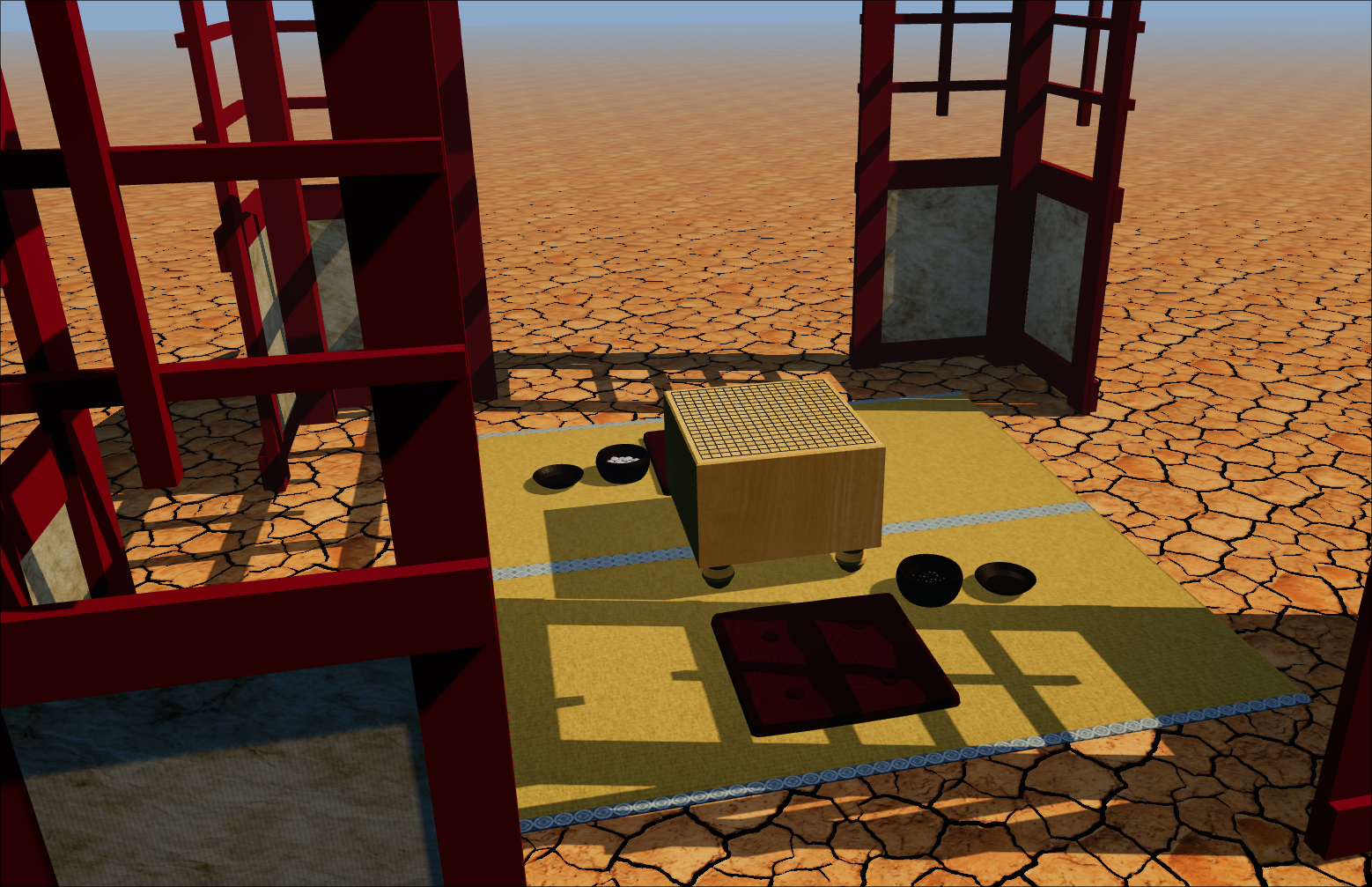
    Many, many years ago…10! It was TEN years ago! :gasp: I wanted to create a space in our Burning Man camp to play Go. I wrote a little about it way back then.

    Loosely inspired by Asian architecture it made for an interesting place to play with whoever might wander by.

    The structure was designed to sort of slot together without nails or screws. It mostly worked but it was not built for a long life under the best of conditions let alone the brutality of the desert and thus it had to be burned.

    A photo of PaGoda on playa for the first time. It is immediately covered in dust.
    A composite image of the various stages of PaGoda life. Far left it starts with an extremely clean and new structure. Then a dusty, dusty version when I first installed it. Then a shot at night, and finally a shot with me and a stranger playing Go in it - possibly the last time it was constructed before it burned.

    It was disassembled, hauled to the still burning embers of the Man, and tossed to the flames. That felt like a complete and satisfying lifecycle.

    But now…

    A screenshot of the Pagoda structure as it appears in a browser.

    It lives again! Through the magic of webGL and three.js (and our friend Claude) you can visit and play Go with whoever else may be visiting right in your browser. https://vaughnhannon.com/pagoda/

    This became a great test subject for a few things.

    • Building a world in VRChat
    • Building a sufficient copy of that world in webGL
    • Use Claude Code to not only program that game of Go but also help with Unity and three.js

    I first modeled all of the assets in Blender and then set the project up in Unity. From there Claude wrote the game logic and the player interaction code to suit VRChat. (Pagoda is available in VRChat but it’s invite only until I’m able to publish public worlds).

    Once it was working there I (well, Claude) set to translate it to three.js so I could host it myself. It’s become glaringly obvious that we must build on platforms that we control in addition to providing content elsewhere. Too many platforms (3D or otherwise) have disappeared or mistreated creators.

    The process has been pretty smooth and I’m looking forward to building more worlds and adding more complicated elements to interact with.

    Now, who wants to play?

  • What a (last) week!

    What a (last) week!

    Last week was unintentionally eventful! I hadn’t planned on attending any of these in advance and, in fact, learned about a couple of them only the day before. No matter! They were each unique and interesting.

    TV Academy Emerging Media – Themed Entertainment Mixer

    Hosted by the Television Academy

    Organized by Gregg Katano, a great mix of folks from the world of media and themed entertainment pros. There some excellent conversations and two panel discussions. It’s clear there is a lot of interest in the crossover between these two worlds and how they can collaborate to bring new experiences to the world.

    Thanks to Butcher Bird Studios for hosting!

    LA Siggraph – State of the Metaverse

    Hosted by LA Siggraph, moderated by Ed Lantz

    Panel: Athena Demos, Deidre Lyons, and Larry Rosenthal

    Metaverse is a loaded word now because one company tried to own it and…well, we know how that went. This conversation circled around the issues of building for a specific platform that may, at any time, be shutdown taking all of your work with it. Open standards have (and continue to) emerged as we build towards a functional 3D Web (we won’t call it the Metaverse for now) that anyone can easily access and participate in.

    Check out the Virtual Worlds History Museum for a look at current and past worlds.

    TEA – AI and the Creative Toolkit

    Hosted by TEA North America Western Division, moderated by Kathleen Cohen

    Panel: Michael Libby, Logan Olson, Kyle Shannon, Matt Spremulli, and Dolce Wang

    AI (I still don’t like calling it that) is a divisive topic and even more so among a group of folks who create stuff for a living. Each member of the panel had about 10 minutes to talk about how and why they use AI in their creative pipeline. The takeaway? Nobody should be just generating content with a prompt. Use the AI tools for the hardest parts along with the finish and polish of your project. The tech is moving fast but it’s still just a tool and can be highly useful when applied appropriately.

    Archiving Immersive Art – A Symposium on Preserving Immersive Media

    Hosted by the USC Mobile & Environmental Media Lab

    Four excellent panel discussions on the why’s and how’s of archiving extended reality experiences. Across all of the panelists was a wide range of experience with XR and a rich history of tech and creative knowledge.

    I wish I had taken better (any) notes during these panels. The consensus is that XR is a viable format for creation and highly effective at transporting your audience to a world you want them to experience. While the current trend may be away from immersive headsets (until it’s not) there are countless worlds to build, stories to tell, and we must archive these for future generations to experience.

    Take a look at The Immersive Archive for ongoing projects to capture the history and created projects in XR.

  • A little something new…

    I’ve been excited about virtual worlds for a long time now. I dabbled in VRML wayyyy back then, built things in Second Life, explored Mozilla Hubs, poked around in VRChat (more to come there) all in the pursuit of virtual spaces to augment the physical world.

    There’s been a consistent problem with all of the platforms created so far. They’re silos. You build for them and your content is stuck there. We’re just now getting to viable, open, standards for spatial experiences on the web – the most accessible and open platform.

    With that I’ve created a new space to showcase the various projects I’ve worked on. This space will evolve and change but I wanted to make something that hearkened back to the days when the internet was fun. When people were building weird, wild things and uploading them for all to see. This is also my first step in creating a virtual space that is open and accessible and not locked to a platform (using three.js, webGL, and some help from Claude). If I DO upload something to a platform you can bet it’s all built offline and ready to go anywhere. But that’s future me stuff. Current me has this to show you:

    A screenshot of my new projects display tower built in three.js and webGL.

    https://vaughnhannon.com/projects

    (it also makes a great fidget spinner on your phone)

  • ActiviyPub Enabled!

    I’ve fully enabled ActivityPub for this site so you can feel free to follow me on your favorite Fediverse platform. Any post here will show up as a post in your social feed.

    vaughn
    vaughn
    @vaughn@vaughnhannon.com

    Creative Technologist working in the Themed Entertainment and live events worlds.

    31 posts
    1 follower
  • Quick Follow Up to “Experiments in AR!”

    Late last year I posted about some fun stuff I was playing with in AR via 8thWall and, around that time, Niantic announced they were closing the 8thWall platform but promised to open source it. Good news! They followed through on that promise:

    A graphic of the number 8 on a black background with gray dots and the text "8th Wall is now open source"

    https://www.8thwall.com/blog/post/208587408737/8th-wall-open-source

    Hopefully I can get my silly little project up and running again on my own server (which is the better option anyway).

  • Can we pump the brakes on the metaverse talk…please?

    Can we pump the brakes on the metaverse talk…please?

    I’ve had this post titled (but unwritten) and sitting in my WordPress drafts since January of 2022.

    You remember…it was the height of Metaverse fever. It was the Next Big Thing(tm) and you were a fool if you weren’t making some sort of play to build “a metaverse.” (have I mentioned I hate it when someone refers to A metaverse…there is only one, there cannot be many, it just…sigh.)

    Of course the majority of Metaverse plays were secretly NFT plays as if a web of virtual worlds couldn’t possibly exist without web3 tech. Much of the hype came from the big social network with the big blue app and the guy who renamed his company because the Metaverse was inevitable. He then went on the spend billions trying to build a singular virtual world completely controlled by him. Not the Metaverse.

    Meanwhile…real work is being done all over the web to build unique and interesting 3D spaces that will, hopefully, connect. I’ve gone on about this before but for the Metaverse to exist a few things have to happen.

    1. Open Avatar Standards
    2. Open and Accessible 3D worlds
    3. Self hosting

    There must be an open avatar standard. We must have the ability to create a 3D representation of us that persists across worlds. You can decide if it looks like you or a giant pink raccoon but that version of you should be able to enter any 3D space without issue. ReadyPlayerMe was the closest but they were recently purchased by Netflix and their services shutdown soon (Jan 31st!). Fortunately, there’s work being done. See the Reference Canonical Skeletal Framework and the KHR Character and Avatar Extension Set.

    Any world must be open and easily accessible. I was pretty excited by Mozilla Hubs because it was so easy to launch a world and get started all via the browser. Unfortunately Mozilla abandoned it BUT open sourced the technology so it lives on as the Hubs Foundation. I’m also excited by Arrival.space and what they’re doing with web based 3D spaces but also Gaussian splats all easily experienced, again, in your web browser (both on your computer/phone or in a headset). These spaces must remain accessible from a variety of devices.

    A screenshot of my avatar standing in the middle of my Arrival.space.
    My ReadyPlayerMe (RIP) avatar standing in my Arrival.space running in a desktop browser.

    Like the 2D web any of us should be able to host our own space. Many will opt to use a hosting service or a prebuilt world that they customize but the option to build it and host it yourself from the ground up must exist to create a vibrant community of virtual worlds.

    I came back to this post with the recent announcements from the guy who renamed his company and the initial feeling that we were, once again, heading for a VR/Metaverse winter. We’re not. Valve has the Steam Frame coming soon. Google, for now (I know I know), is pushing ahead with AndroidXR. Open source tools and game engines are making it easier and easier to build things once and publish to multiple platforms (until standards unite them all!) allowing for rapid experimentation. Organizations like ImmersiveX and the Virtual Worlds Museum (2D site here) are actively building and evangelizing and engaging in multiple worlds.

    While I feel for all of those who built something only to have it bought up and then killed and the numerous folks laid off this is likely all better for the greater ecosystem. The giant tech company was taking up a lot of space and now, perhaps, we can grow the Metaverse we want and deserve. There’s still a long road ahead of us but the foundation is being built now.

  • Two Weeks of Conferences – Different but the Same

    I’m in the middle of an already long week of IAAPA meetings, gatherings, and sessions in the heart of Florida Vacationland that contrasts starkly to last week’s Immersive X conference that took place entirely in virtual worlds accessed via headset or computer.

    Into the Virtual

    Immersive X is a 3 day gathering of talks, tours, and social activities held across different platforms for building experiences in virtual worlds. VRChat, Engage, Arrival Space, Spatial io. Each platform chosen for its strengths and set of tools that best serve the hosted session. Attendees dressed as humans wearing human things but also as raccoons, Chile peppers, tiny foxes, robots, and more! This is all expected in the virtual world and thus having a conversation with a robot about art inspired by Arabic writing is perfectly mundane (in the best sense of the word).

    The sessions covered a variety of topics across art technology, humanity, and social well being. The schedule was packed tight and, as with any good conference, there was no way to attend every session. Here’s a screenshot of the sessions I planned to joined:

    A screenshot of my schedule of sessions to attend at the Immersive X conference

    Over the course of 3 days I was able to continue working and continue being with the family while dipping into a scheduled session for 45 minutes at a time. After the first few talks I began to recognize familiar avatars from previous talks noting who was interested in similar topics. Unfortunately I didn’t prioritize any of the social gatherings so I had little opportunity to chat with other attendees outside of the sessions.

    Two of the standouts (of the talks I attended) involved building a world for an artist’s work and another for creating venues for live music and gathering.

    During the Ink Never Dies session we were guided through a world built to represent ancient Arabia. As you walk through the world golden Arabic characters appear before you as the artist’s voice fills the air to speak about their art and the influence of Arabic culture.

    A screenshot of a world built for artist Karim Jabbari to showcase their work with Arabic calligraphy. Large, golden Arabic lettering floats above the ground as golden particles float around it. There's a multi-tiered fountain in the background.
    Arabic calligraphy hovering among sparkly particles

    The world is still active and you can visit it at any time: (and you should) Vertical Horizon

    A screenshot of the Vertical Horizons with a group of avatars in the foreground awaiting a tour of the world.

    The Show Must Go On began as a more traditional talk in an amphitheater but then led to world hop where we could experience some of the venues that were created for live music performance.

    A screenshot of an amphitheater with an avatar giving a talk at the podium in the front and a large presentation screen behind them.
    An amphitheater and audience during The Show Must Go On presentation at Immersive X 2025

    Each world was purpose built for a musical artist to fit their style and aesthetic. The spaces live on after the live performance with a recording that plays and can be enjoyed any time.

    A screenshot of the Oxymore world in VRChat with avatars dancing as a pre-recorded performance plays on the stage.
    A world built for Jean-Michel Jarre as an homage to Pierre Henry.

    My favorite venue was Oxymore (named for the album) and, as we learned, there were custom avatars created for the live performance so the guests could dress to match the world. VRROOM built this world for Jean-Michel Jarre to perform an homage to Pierre Henry.

    Back to the “Real”

    IAAPA is a week long conference for the theme park, attractions, etc industry that takes place at the Orange County Convention Center in Orlando, FL. So there I was, in Orlando, FL at IAAPA, (I had actually started writing this in the middle of IAAPA but I’m only finishing it up now) among people dressed as people to convince each other that they are trustworthy and safe to work with. The week packed with meetings, gatherings, and sessions to attend because a lot of money was spent to be there and thus every minute should be filled to justify the expense. This is the way of the business conference.

    A screenshot of my calendar from IAAPA week. Details blurred to protect the innocent.
    A glimpse of my calendar from IAAPA week. Details blurred to protect the innocent.

    Like any industry gathering you are presenting your best self all day to everyone and anyone. There are brief breaks and maybe you can find a corner where you can stop smiling for a minute but for the most part you are engaged and hyper aware of how to present yourself. Then a quick change of clothes and off you go to a party or demo where you continue until late in the evening. You drink a little but not too much (you hope) you chat, you laugh, you recount that one time that project went horribly wrong but then in the end you made it work. Then you go to bed and wake up and do it again. Even the extroverts are exhausted after a couple of days of this.

    A photo of a panel presenting at IAAPA 2025. The session was titled "The Winning Formula: Combining Creativity and Data to Craft Scalable Immersive Experiences" which is a mouthful. The panel is 4 white males which continues to be a problem.
    Photo from “The Winning Formula” session at IAAPA 2025

    But we keep doing it because being in a physical space with other people is still hard to replace.

    Addition not Substitution

    This is not about which is experience is better. They both have reasons for being and they are both valid and worthwhile. Humans have evolved to exist together in physical space and replicating that to any level of success is quite a feat.

    There is a comfort in the casual pace of the virtual conference. I’m not rushing to be anywhere, there’s no travel time, no crowd to push through. I put the headset on (or just load up the world on the computer) and teleport to the venue. If I’m early I can chat with others and find a seat, or stand (my avatar can stand forever). My avatar handles the presentation of me. I don’t feel pressure to put on appearances. I can sit comfortably in any room of the house. I can enjoy and absorb the content in a manner that suits me at the moment. When the presentation is done, more often than not, the presenter can open a portal to the very project or world they have discussed and we can all hop through and experience it instantly. When I’m ready, I hop to the next one or jump out and take care of work, or lunch, or home stuff.


    There is excitement in the madness of the physical conference. A weeks worth of potential bottled up and waiting. Who will you see? What surprise thing will you happen upon on the show floor? Why is so and so hanging out with so and so? You can’t know who is immediately around you and thus you don’t know what interesting conversation you may end up having. Walking around a show floor you can smell, touch, taste, and maybe even climb a thing. The serendipity is the true secret sauce of the physical gathering.

    A virtual conference handles the talks, presentations, and scheduled events equally as well as a physical gathering. If it is well designed the sights and sounds will convince your brain that you are in another place among a crowd of people with similar interests. If that’s all there was to it the virtual gathering should be the preferred format for any conference. What the virtual has yet to capture are the moments between the scheduled sessions. Those chats in the hall, running into someone at a local lunch spot, grabbing a coffee for a colleague you haven’t seen in a while. The friction of the real world creates moments that connect us.

    We can have both. IAAPA is a conference for the business of in person entertainment. Theme parks, water parks, museums, zoos, FEC’s (family entertainment centers), etc etc. It’s all about going to a place and doing a thing in the physical world. That’s not to say that there could not or should not be a virtual component to it. Not everyone can travel to Orlando for the week. The show is vast and could be hard to navigate for some. The show is overwhelming and may be overstimulating. It’s entirely possible for IAAPA to offer a virtual ticket to a virtual space where education sessions are streamed and people (and their avatars) can book virtual conference space. But what about…? No…video conferences aren’t the same as being in a shared, virtual space.

    Immersive X could be virtual first with a physical component for those who can make the trip. The whole conference is organized in Europe and on CET. I’m thankful I was able to attend (even if I did have to get up at 6am PST sometimes) and if it wasn’t virtual I certainly would not have made it to Europe. It’s conceivable that those more local to the EU could gather in person and attend either via a streamed feed from the virtual world or, better yet, a shared physical space that mirrored a virtual space. In person and in VR. Complicated…maybe, but doable.

    So what?

    The fortuitous timing of these two shows happening back to back provided a fascinating glimpse into how humans connect in real and virtual space, where the strengths and weaknesses are in both scenarios, and how both could improve and exist simultaneously but also as hybrids of each other. I’m excited for more virtual conferences to emerge and I’d love to see long running physical conferences like IAAPA embrace a virtual component.

  • Experiments in AR!

    I’ve been poking around 8thWall to see how it all works. The whole dev environment is web based which is great for picking up and working anywhere on almost any device. I made this foolish cap just to get a sense of what’s what (it will ask for your camera because it uses your head):