XShot VidCon Gallery

Spring of 2022 I was approached to build out a system for a “digital shooting gallery.” XShot designed and built a booth that would contain two shooting galleries using their foam dart weapons.

A photo of the XShot shooting gallery booth at VidCon 2022. It's mostly white with Xshot branded graphics on the sides and a clear case displaying all of the xshot dart shooters.

The galleries would run simultaneously and groups in the galleries would score points for every target they hit. Scores were only kept for each group (not individuals). Outside of the galleries there was a monitor mounted above that displayed the high scores for groups that came through the galleries that day.

The two galleries had unique designs. Gallery 1 was stylized to feel roughly like an 8bit environment. The monitors were masked to give them unique shapes and the characters on the monitors were 8bit style sprites that would bounce or slide around.

A photograph of the first shooting gallery done in an 8bit style. There were monitors hidden around that displayed 8bit characters. If the player hit the monitor they scored a point for their team.

Gallery 2 was designed like the back alley of a city. The targets were signs or graphics one may see in the big city.

A photograph of the second shooting gallery done in a back alley, city style. There were monitors hidden around that displayed graphics and characters. If the player hit the monitor they scored a point for their team.

Each gallery would take up to 4 players who could choose the style of weapon and shoot constantly for a limited time. The game was started by a host who would hit a hidden button that set the system to start after a brief countdown. Each monitor had a Raspberry Pi attached to the back of it along with a small vibration sensor. The sensor was sensitive enough to detect when the monitor was hit and register the score with a central computer running a scorekeeping app built in Unity. Each Pi was wired into the network so data was reliably sent to the computer. It would have been madness to depend on wifi on a trade show floor. The main computer was also displaying the high scores to a monitor above the booth and two monitors that players could look at upon exit from the galleries.

There were 28 Pis used across the two galleries and the game ran for 3 days, the length of VidCon 2022. Here’s a walk through of the game as it was played:
Seconds to Last

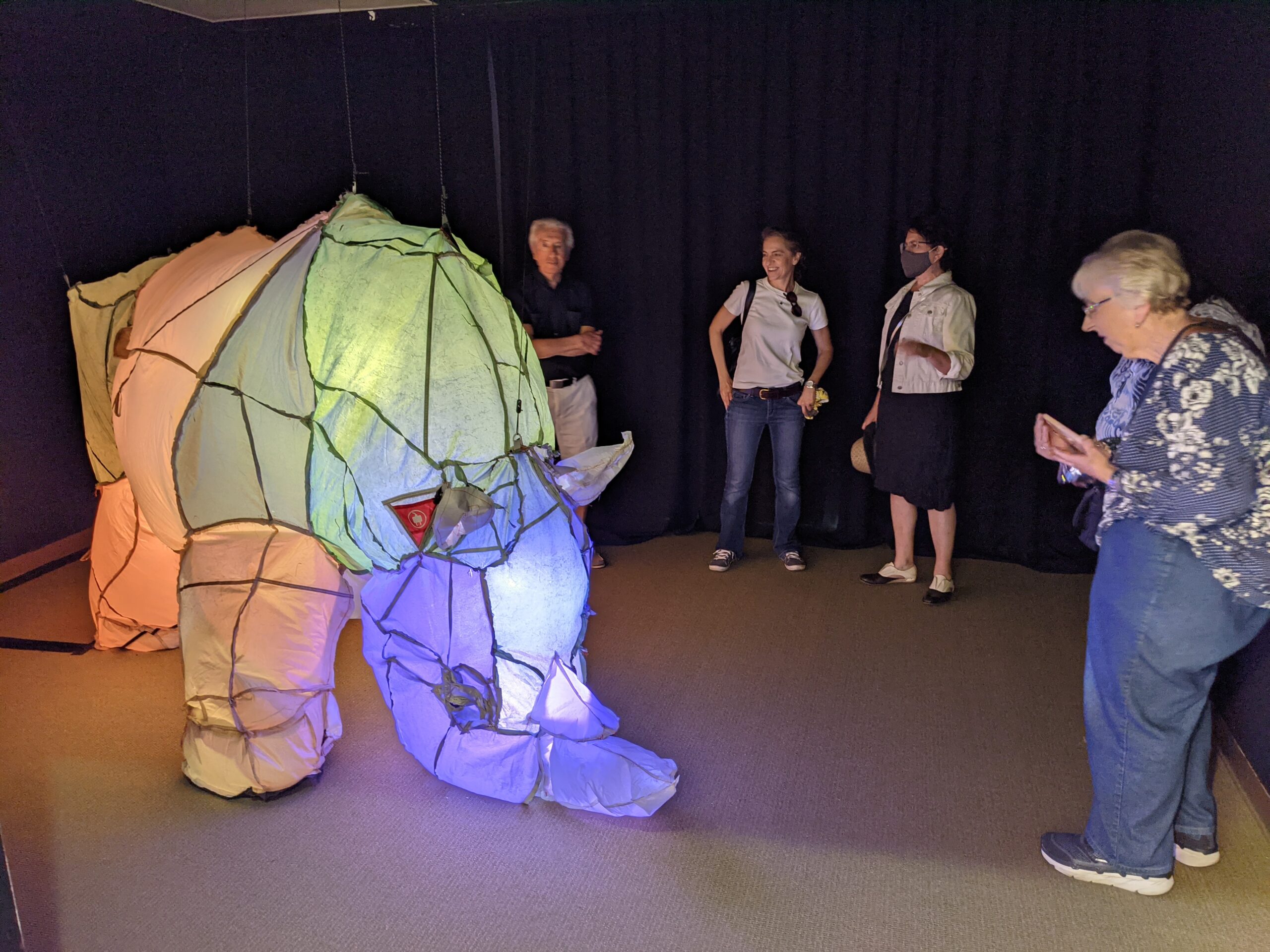
A photo of Cynthia Minet discussing her sculpture "Seconds to Last" to a group of gallery visitors
A photo of the rhino sculpture fully lit from within.
A photo of the rhino sculpture lit from within half way through the lighting sequence.
A photo of the rhino sculpture with its internal lights off.

In a departure from previous materials, Cynthia Minet used discarded tents to create this life size representation of the nearly extinct Northern White Rhinoceros. In this installation, Seconds to Last, Cynthia wanted to use light to convey the disappearance of these huge beasts.

Due to the volume of the sculpture and in an attempt to avoid hot spots I used LIFX smart bulbs, 7 of them whose colors reference the seven energy chakras, to provide the internal lighting. To program the sequence of the bulbs fading off I installed Home Assistant on a Raspberry Pi and set this up like a typical smart home automation. This allowed us to easily program a time of day sequence and let it run during gallery hours but turn off for the night.

A photo of the clay model for the rhino in the foreground and the finished piece in the background
The clay model that Cynthia made with the finished sculpture in the background

Visit Cynthia’s Seconds to Last page for a full description of the work.