Seconds to Last

A photo of Cynthia Minet discussing her sculpture "Seconds to Last" to a group of gallery visitors
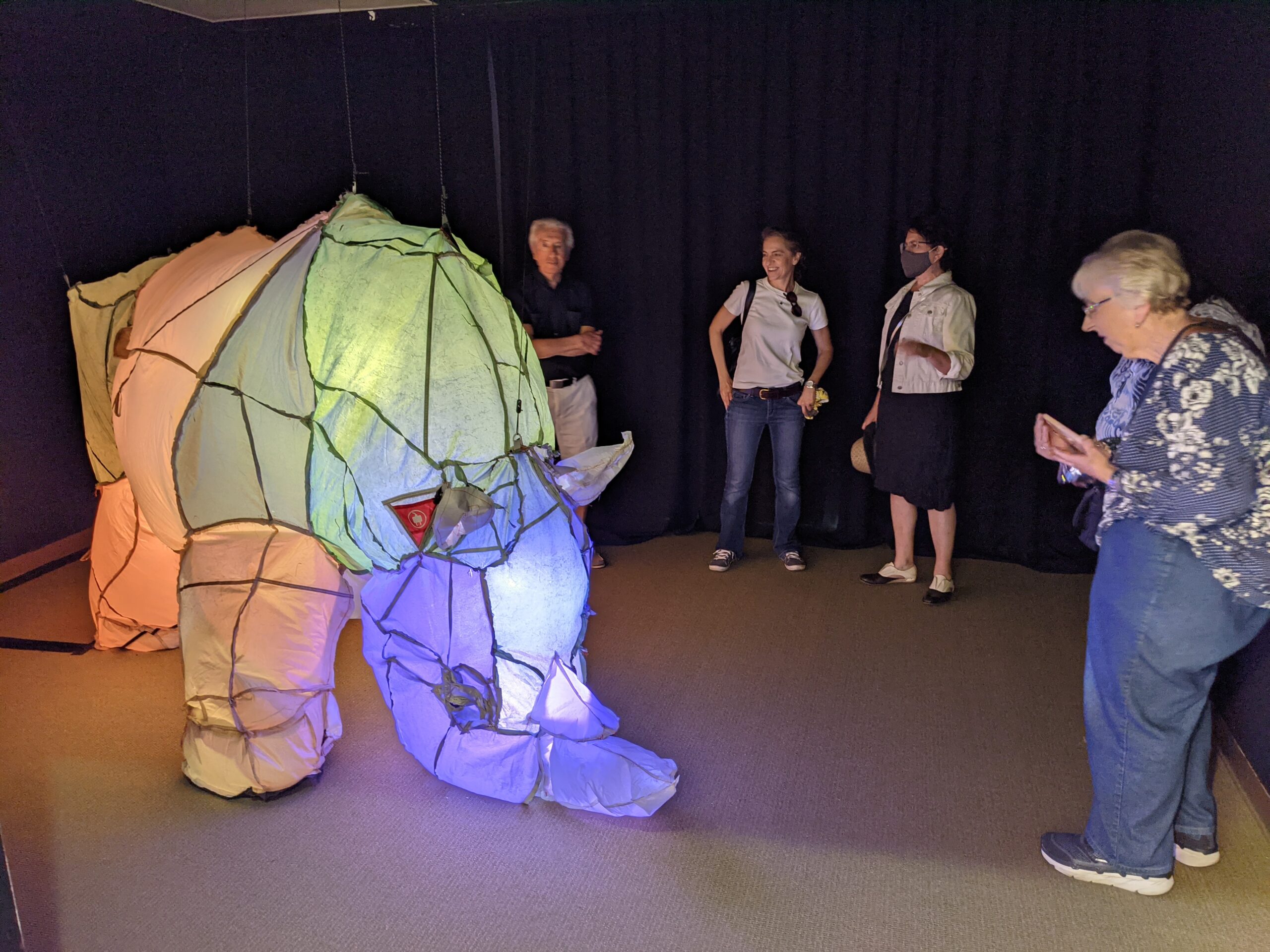
A photo of the rhino sculpture fully lit from within.
A photo of the rhino sculpture lit from within half way through the lighting sequence.
A photo of the rhino sculpture with its internal lights off.

In a departure from previous materials, Cynthia Minet used discarded tents to create this life size representation of the nearly extinct Northern White Rhinoceros. In this installation, Seconds to Last, Cynthia wanted to use light to convey the disappearance of these huge beasts.

Due to the volume of the sculpture and in an attempt to avoid hot spots I used LIFX smart bulbs, 7 of them whose colors reference the seven energy chakras, to provide the internal lighting. To program the sequence of the bulbs fading off I installed Home Assistant on a Raspberry Pi and set this up like a typical smart home automation. This allowed us to easily program a time of day sequence and let it run during gallery hours but turn off for the night.

A photo of the clay model for the rhino in the foreground and the finished piece in the background
The clay model that Cynthia made with the finished sculpture in the background

Visit Cynthia’s Seconds to Last page for a full description of the work.

Jacked: Panthera Atrox

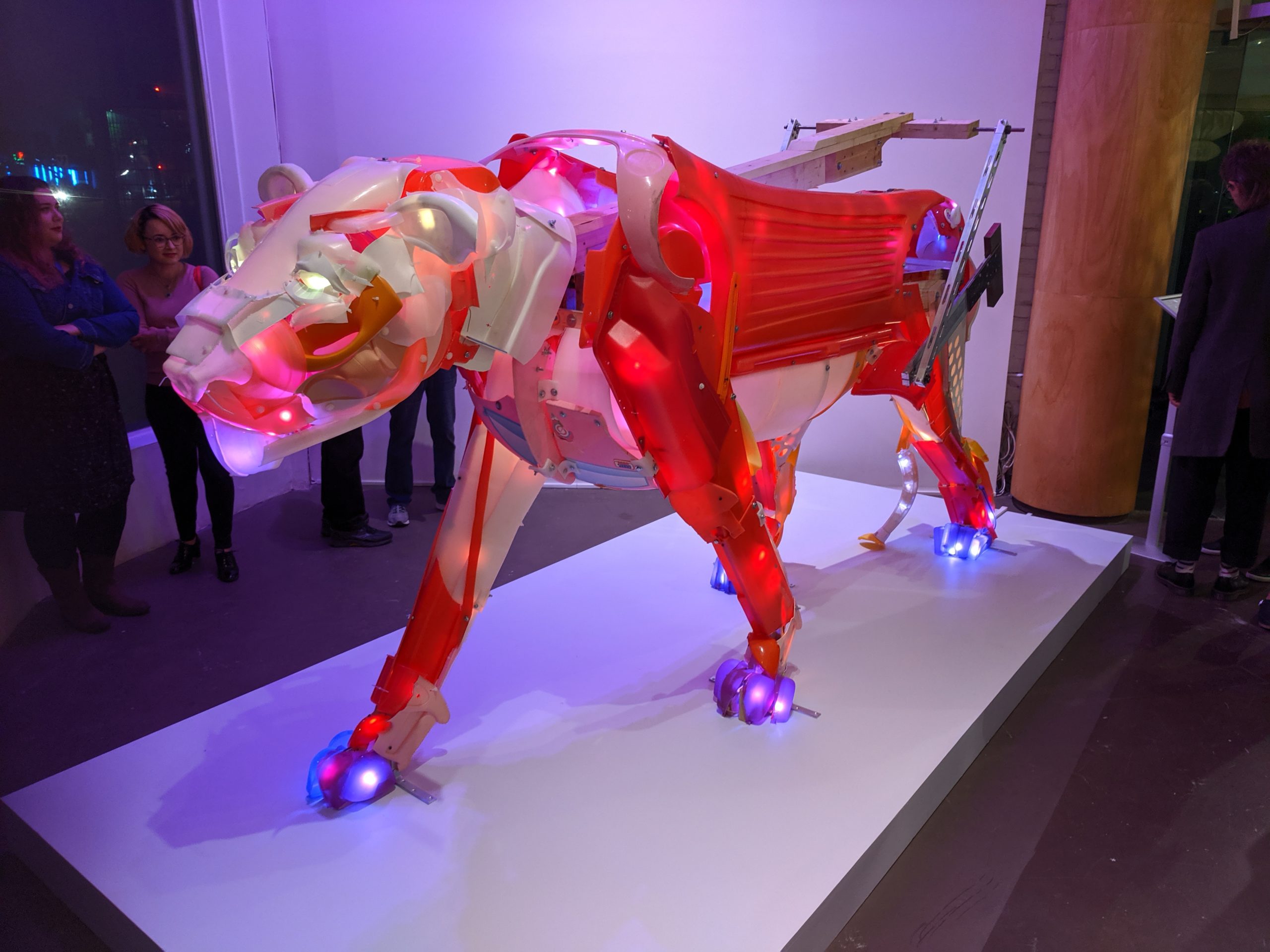
Another collaboration with Cynthia Minet. Jacked: Panthera Atrox is the latest of her incredible animal creations built from reclaimed plastic and this time animated with a similar mechanism to a pump jack used to push oil out of the ground. The lioness’ head tilts up and down with the rhythmic movement of the pump arm.

A photo of a sculpture made of reclaimed plastics and LED lights. It's a representation of an extinct lion, Panthera Atrox. The photo shows it on display in the window of the Craft Contemporary museum in Los Angeles.
Panthera Atrox on display at the Craft Contemporary in Los Angeles

I worked with Cynthia to install the LED lighting throughout the sculpture and programmed the colors using an Arduino and the FastLED library. This allowed us to tune each individual LED to the color based on the light’s location within the sculpture.

Jacked was on exhibit at the Craft Contemporary and stood in the window opposite the La Brea tar pits.

3D printed skulls lit from below with projected, animated text beside them

In addition to the Panthera Atrox Cynthia had printed three skulls of animals that have been lost to extinction. We installed mini projectors above the skulls and I animated the text displayed by each skull to slowly disintegrate in After Effects. The text is from Charles Harper Webb’s poem, “The Animals are Leaving”.

For more information on the installation visit Cynthia’s Jacked: Panthera Atrox page.

Open Studio – Migrations

Friends! As some of you know I’ve been collaborating with Cynthia Minet on her new installation that will soon be opening at the International Museum of Art and Science in McAllen, Texas. If you’re in Los Angeles this Sunday, March 4th from 2p – 5p you can get a sneak peak of the work at Cynthia’s studio here at the Brewery.

A photo of Cynthia in her studio with sculptures of the Roseate Spoonbills made of reclaimed plastics and lit internally with LED light.

I worked with Cynthia on the lighting/audio system design and programming. Each sculpture has about 49 RGB LEDs in it controlled with a Trinket microcontroller. The audio is triggered by motion and powered from a Trinket Pro. If you have questions, you’ll have to come to the studio 🙂

There is more info on the open studio at the Facebook event page. We hope to see you there.


Collaboration

It’s been quiet in my creative world…but not uneventful. Over the last couple of months I’ve had the pleasure of working with Cynthia Minet on her upcoming installation, “Migrations.” Cynthia is an accomplished artist and her creations are constructed from post-consumer plastics and LED lighting. Migrations depicts six Roseate Spoonbills in varying stages of flight. With this sculpture Cynthia hoped to push the lighting a little further than she had in previous work.

There were two goals.

  1. Have greater control over the color and brightness of each LED
  2. Add movement to the sculpture by animating the LEDs
A closeup of an LED behind a magnifying glass with its wires splayed out as I do my best to connect it to another strand of LEDs.

After some initial conversation a third goal popped up. If we’re going to be programming these LEDs could we also add some motion activated audio to immerse the viewer in the world of the spoonbill?

After some testing we settled on the P9813 LED pixels. The plastic casing around the actual LED helps diffuse the light. The fact that the strands run at 5v was an added bonus. 

To program the lights and the motion based audio I knew we were going to use something in the Arduino family. The spoonbills do not have a ton of room inside of them so we opted for a Trinket to run the lighting and a Trinket Pro to run the audio system. Ideally everything would run off of one board but that just wasn’t feasible here. This also cut down on the cost for each sculpture. 

The next few posts will get into the details of the wiring, programming, testing, and installation of the lighting and audio systems. 

If you’re around this weekend (Oct 21 and 22) you can see the sculpture in its current state at the Brewery Art Walk. Art Walk runs from 11a-6p both days.